Research
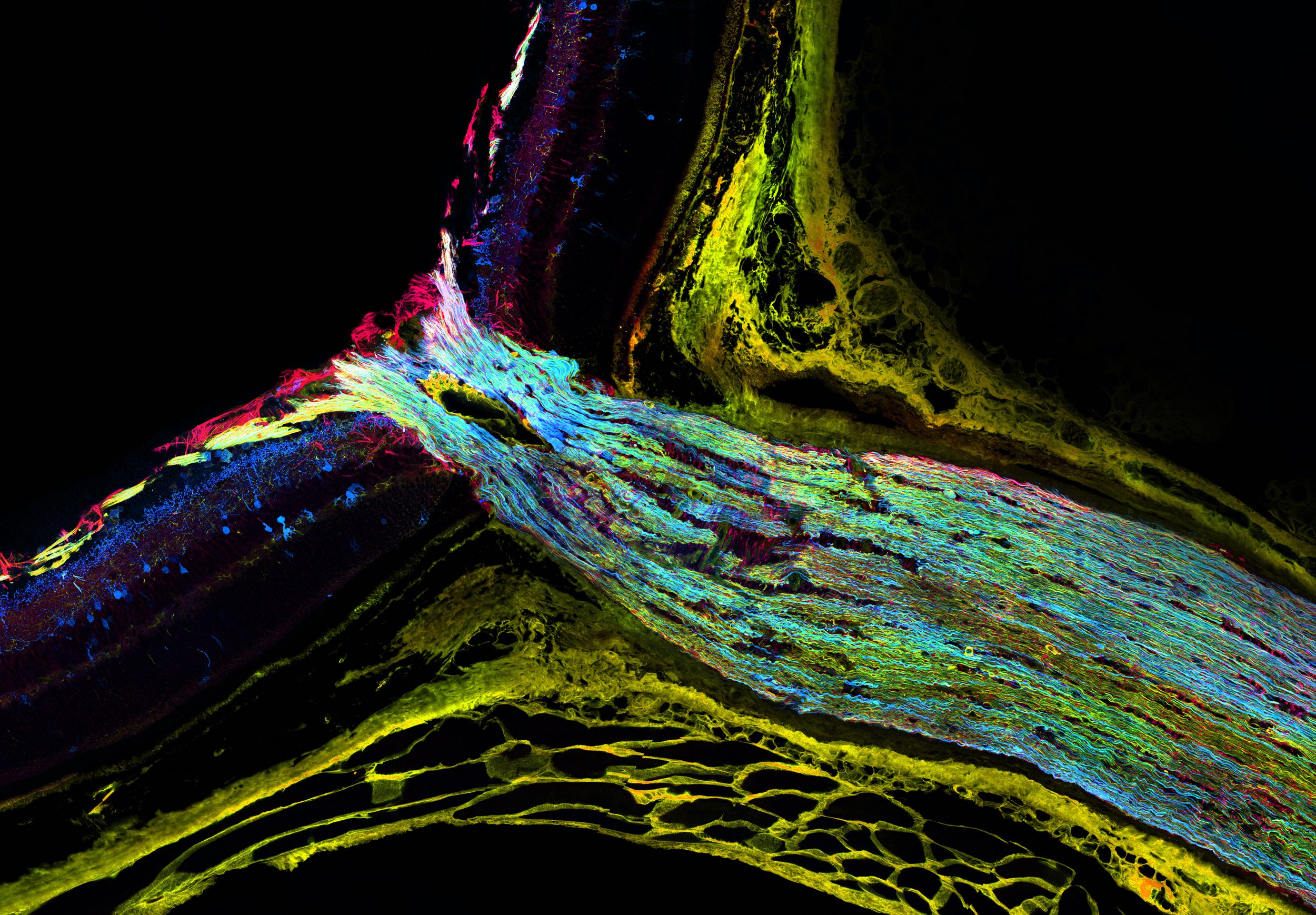
What is glaucoma?
Glaucoma comprises a group of eye disorders characterized by progressive damage to the optic nerve—the nerve responsible for vision—resulting in gradual retinal ganglion cell loss, visual field deterioration, and potentially irreversible blindness.
Although highly prevalent, the mechanisms driving disease progression remain incompletely defined. In primary open-angle glaucoma, the most common subtype, established risk factors include advancing age, elevated intraocular pressure (IOP), and systemic factors such as a positive family history and abnormalities in blood and cerebrospinal fluid pressure.
Elevated IOP is the only definitively modifiable risk factor; however, lowering IOP with topical medications to the traditionally accepted “normal” threshold of 21 mm Hg often fails to halt disease progression, necessitating more aggressive interventions, including surgical procedures. At present, no cure exists, but early detection and timely treatment can limit further damage and help preserve visual function.
Therefore, there is an urgent need for novel therapies that directly target retinal and optic nerve neurodegeneration to complement standard IOP-lowering strategies.
Current Projects
-
Our research focuses on A-kinase anchoring protein 1 (AKAP1), a key organizer of mitochondrial signaling, dynamics, and bioenergetics at retinal synapses and axons. Using preclinical glaucoma and optic nerve injury models, AKAP1 gene therapy (AAV2-AKAP1) preserves presynaptic structure and function, maintains mitochondrial integrity, enhances retinal ganglion cell survival, and promotes axonal regeneration. By targeting mitochondrial and synaptic pathways beyond intraocular pressure lowering, this strategy aims to deliver durable neuroprotection and sustained vision preservation for patients with glaucoma.
-
Our research focuses on how glia-driven neuroinflammation, mitochondrial dysfunction, and cholesterol dysregulation contribute to retinal ganglion cell degeneration in primary open-angle glaucoma. The team has identified apolipoprotein A‑I binding protein (AIBP) as a key regulator that limits TLR4-mediated inflammatory signaling, improves mitochondrial function, and protects retinal ganglion cells and Müller glia, highlighting AAV-based AIBP gene augmentation and recombinant AIBP protein as promising new glaucoma therapies.
-
Gene therapy using adeno-associated virus (AAV) in ocular diseases has been an active area of clinical investigation because it can achieve long-term stable transgene expression at levels that are therapeutic and sustain effects with even a single injection.
There are additional unique advantages: 1) AAVs are non-pathogenic and non-integrating vectors, 2) the eye has a well-defined structure for local delivery, including the ability to directly visualize and access the retinal tissue, 3) the blood-retinal barrier contributes to ocular immune privilege and limits immunogenic responses to gene therapy products, and 4) availability of relevant animal models. Notably, the FDA approved Luxturna®, the first directly administered gene therapy, for the treatment of patients with confirmed biallelic RPE65 mutation-associated retinal dystrophy, which leads to vision loss and may cause complete blindness in some patients.
Our research reinforces the therapeutic potential of the AAV approach in treating other ocular diseases, such as glaucoma and other optic neuropathies.
We have identified AIBP and AKAP1 as downregulated proteins in the retinas of patients with glaucoma. Using animal models of glaucoma, restoring AIBP or AKAP1 expression via a single intravitreal injection of AAV2-AIBP or AAV2-AKAP1 reduced retinal neuroinflammation and neurodegeneration, prevented retinal ganglion cell loss and optic nerve degeneration, and preserved visual function.